
Underpass Excavation Beneath an Expressway in Singapore: Monitoring, Risks and Anomaly Interpretation
Excavating a pedestrian underpass beneath or immediately adjacent to a live expressway creates a highly sensitive interface between underground construction, earth-retaining systems, groundwater control and an operating road. A well-designed geotechnical monitoring programme helps engineers distinguish normal construction response from developing ground or structural movement.
Why an underpass beneath a live expressway requires close monitoring
Consider a pedestrian underpass constructed beneath an existing expressway while traffic remains operational. Excavation may be undertaken within an earth retaining or stabilising system, with staged excavation, temporary supports, groundwater control and subsequent construction of the permanent underpass structure.
In this type of project, monitoring should not be treated as a collection of isolated readings. The objective is to establish a connected picture of ground movement, structural movement, groundwater behaviour and construction activity. GEOUE approaches this type of problem through an integrated instrumentation and monitoring strategy.
Typical instrumentation and what each instrument tells the engineer
No single instrument can explain the behaviour of an excavation. The strongest monitoring systems use several independent measurement types so that one observation can be checked against another.
| Instrument / System | Primary Measurement | Typical Role in an Underpass Project | Engineering Question |
|---|---|---|---|
| Road / Ground Settlement Points | Vertical movement | Installed across and around the road influence zone to identify settlement or localised heave. | Is the expressway surface moving vertically as excavation progresses? |
| Survey Prisms / Monitoring Targets | 3D positional movement | Used on suitable structural or monitoring points to track horizontal and vertical displacement. | Is movement developing in a consistent spatial direction? |
| Inclinometers | Lateral ground or wall deformation with depth | Commonly associated with retaining walls or ground beside excavation to identify the depth and profile of lateral movement. | Is the retaining system deflecting, and at what depth is movement concentrated? |
| Piezometers | Pore-water pressure | Used to observe groundwater response around the excavation, particularly where dewatering or groundwater cut-off is important. | Is groundwater pressure changing in a way that may affect ground stability or settlement? |
| Water Standpipes | Groundwater level | Provide a direct indication of changes in groundwater elevation at selected monitoring locations. | Is a broader groundwater drawdown developing around the works? |
| Vibration Monitors | Construction-induced vibration | Track vibration associated with breaking, piling, excavation, compaction or other construction processes. | Is a sudden response caused by vibration rather than permanent ground deformation? |
| Crack Meters | Change in crack width | Applied where existing cracks are present in adjacent structures or structures requiring specific observation. | Is an existing defect stable or responding to construction? |
| Automated Monitoring Systems | High-frequency or remote measurements | Can provide more frequent observations at critical locations and support rapid review during sensitive excavation stages. | Is movement accelerating between conventional manual monitoring intervals? |
Depending on the project, the monitoring scheme may combine settlement monitoring , inclinometer monitoring , piezometer monitoring , survey monitoring and vibration monitoring .
A reading becomes meaningful when it is connected to the construction sequence
Monitoring data should be interpreted against what was physically happening on site at the time of the reading. The same amount of movement may have a very different meaning before excavation, immediately after excavation or after the permanent structure has been completed.
Baseline period
Establish stable reference readings before significant construction activities begin. Baseline monitoring also helps identify natural variation, traffic effects, temperature effects and pre-existing movement.
Retaining system installation
Monitor vibration, ground response and initial movement associated with installation of retaining elements, piling or other enabling works.
Initial excavation
Compare wall movement, settlement and groundwater response as the first significant change in ground stress occurs.
Progressive excavation and support installation
Correlate every excavation stage and support level with inclinometer, settlement, groundwater and survey data. Trends are often more informative than individual readings.
Base slab and permanent structure
Determine whether movement is stabilising as the permanent structural system is introduced and temporary construction stages are completed.
Backfilling, road reinstatement and post-construction monitoring
Continue monitoring long enough to demonstrate that road, ground, groundwater and structural responses have stabilised in accordance with the project requirements.
What abnormal readings may be telling you
An abnormal value should not automatically be interpreted as ground failure, and it should not automatically be dismissed as instrument error. Good monitoring practice requires cross-checking independent measurements and the construction sequence.
Road settlement increases while inclinometer movement remains limited
This pattern may indicate a mechanism other than major retaining-wall deformation. Possible considerations include groundwater drawdown, local ground loss, consolidation, disturbance around utilities or a localised surface condition.
The next review should therefore compare settlement points with piezometer or standpipe response, adjacent survey points and recent excavation or dewatering activities.
Increasing inclinometer displacement accompanied by road settlement
Correlated lateral deformation and vertical movement may indicate that the excavation and retaining system are influencing the ground behind the wall.
Review the deformation profile with depth, excavation level, support installation sequence and neighbouring settlement points rather than considering only the maximum inclinometer value.
A sudden large survey movement occurs at only one monitoring point
A single-point jump with stable neighbouring measurements can arise from a damaged target, disturbed settlement marker, survey line-of-sight issue, temporary obstruction, reference-point problem or genuine highly localised movement.
The reading should be verified promptly rather than simply deleted from the monitoring record.
Piezometric pressure reduces before settlement becomes apparent
Groundwater response can provide important context before measurable surface deformation develops. An unexpected drawdown should be compared with pumping records, excavation depth, groundwater cut-off performance and neighbouring groundwater instruments.
A vibration spike occurs without permanent settlement or structural movement
Short-duration vibration may be associated with a particular construction activity, heavy vehicle passage, breaking work, compaction or local sensor disturbance. Time correlation with the site activity log is therefore essential.
Several independent instruments change at approximately the same time
Simultaneous change in settlement, lateral displacement or groundwater measurements deserves greater attention than an isolated instrument excursion. However, common reference, power, communication or survey datum problems should also be excluded.
This is why GEOUE advocates multi-parameter interpretation rather than evaluating each monitoring instrument independently.
A practical workflow after an unexpected monitoring result
Monitoring is most valuable when abnormal data triggers a disciplined verification and engineering review process rather than an immediate assumption about the cause.
For projects requiring an independent technical assessment, GEOUE can also support monitoring review and geotechnical monitoring consultancy within the agreed project scope.
When higher-frequency monitoring becomes useful
Manual monitoring remains appropriate for many instruments and project stages. However, certain high-risk or rapidly changing construction phases may justify higher-frequency or automated observations.
Critical excavation stages
Increased observation frequency can provide a clearer picture when excavation depth, support conditions or groundwater response are changing rapidly.
Live expressway operation
Automated measurement can reduce gaps between observations where continuous road operation makes movement particularly sensitive.
Trend recognition
Higher-frequency data can help distinguish isolated noise from a persistent or accelerating trend.
GEOUE’s automated monitoring approach can be integrated with conventional geotechnical instrumentation rather than treating manual and automated monitoring as mutually exclusive systems.
Monitoring the interaction between excavation and road infrastructure
In Singapore, works affecting public streets and road structures may require monitoring arrangements, instrumentation proposals, regular monitoring records and engineering review in accordance with the applicable authority approvals and project requirements.
The instrumentation system should therefore be designed around the actual zone of influence, ground conditions, excavation method, retaining system, groundwater regime and sensitivity of the road or surrounding assets.
A high-quality deep excavation monitoring programme should connect measured behaviour with the construction method rather than simply generate a large volume of readings. Where an ERSS monitoring system is involved, the relationship between retaining-wall movement, ground settlement and groundwater response becomes especially important.
Explore related Singapore monitoring services
Underpass construction may involve several monitoring disciplines. The following GEOUE pages provide more detailed information on individual monitoring systems and engineering services.
The value lies in interpreting systems together
For an underpass excavated beneath a live expressway, the most useful monitoring question is rarely simply: “Has one instrument moved?”
The more useful questions are whether movement is spatially consistent, whether it corresponds to a construction stage, whether groundwater is changing, whether lateral and vertical movements correlate, and whether the observed trend is stable, continuing or accelerating.
Combining settlement, survey, inclinometer, groundwater and vibration information allows the project team to move from measurement to engineering interpretation.
This integrated monitoring philosophy forms part of GEOUE’s approach to geotechnical instrumentation and monitoring for infrastructure and construction projects in Singapore.
Planning monitoring for an excavation or underpass project in Singapore?
Discuss instrumentation selection, monitoring strategy, automation, technical review and project-specific monitoring requirements with GEOUE.
Explore Instrumentation & MonitoringOur Engineering Services
End-to-end instrumentation and monitoring solutions for safe, efficient and data-driven projects.

Instrumentation & Monitoring
Design. supply and installation of geo / structural instruments.

Soil Investigation
In-situ and lab testing
to assess ground conditions.

Geophysical Survey
Advanced geophysical methods
for underground mapping.

Geotechnical Consultancy
Technical advisory and design support for geotechnical works.

Survey
Precision surveying using total stations, GNSS, LiDAR and drones.

Structural Monitoring
Real-time monitoring of structures for performance and safety assurance.

Installation
Professional installation by experienced teams with strict quality control.

Maintenance
Routine maintenance, and data validation for long-term performance.
Singapore Project Experience
The GEOUE team members have participated in a wide range of geotechnical instrumentation and monitoring projects across Singapore, including transportation infrastructure, deep excavation, underground construction and private developments.

MRT & Rail Projects
Instrumentation and monitoring works for MRT lines and rail infrastructure.

Deep Excavation
Monitoring of deep basements and retaining structures in dense urban areas.

Building & Development
Monitoring solutions for high-rise, mixed-use and residential developments.
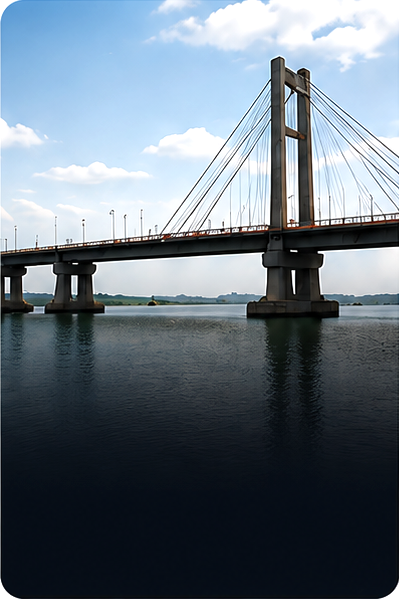
Bridges & Structures
Structural health and performance monitoring for bridges and infrastructure.
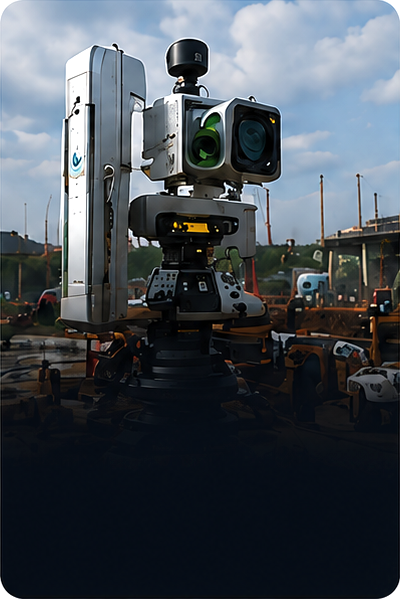
Industrial & Utilities
Instrumentation and Monitoring for utilities, tunnels, pipelines and industrial facilities.
Our Approach

Understand
We study your site and project requirements.

Monitor
We monitor, analyze and
provide actionable insights.

Design
We design the right
solution for your needs.

Partner
We partner with you to
ensure long-term success.

Deliver
We install and commission
with precision.

Support
We maintain and support
for the long term.
Our Core Services
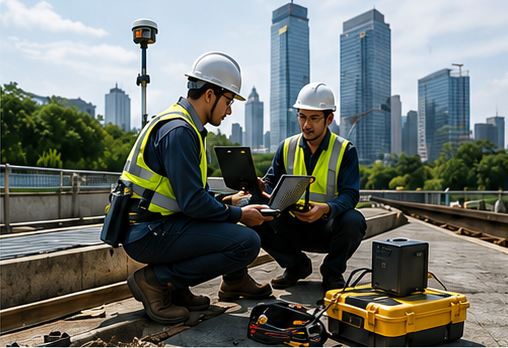
Instrumentation & Monitoring
Real-time data acquisition and monitoring for geotechnical and structural applications.
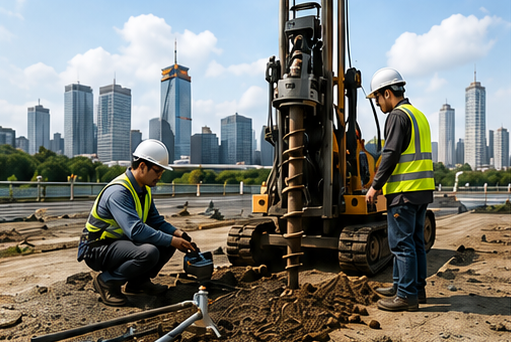
Soil Investigation
In-situ tests, sampling and laboratory analysis to evaluate subsurface conditions.
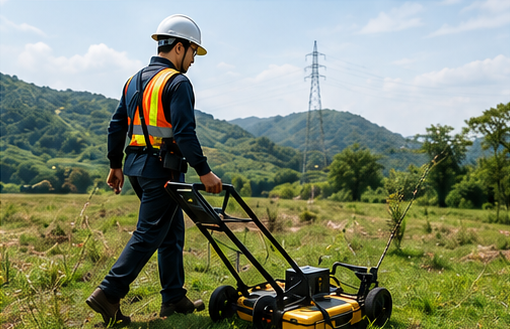
Geophysical Survey
Advanced geophysical methods to map subsurface conditions non-destructively.
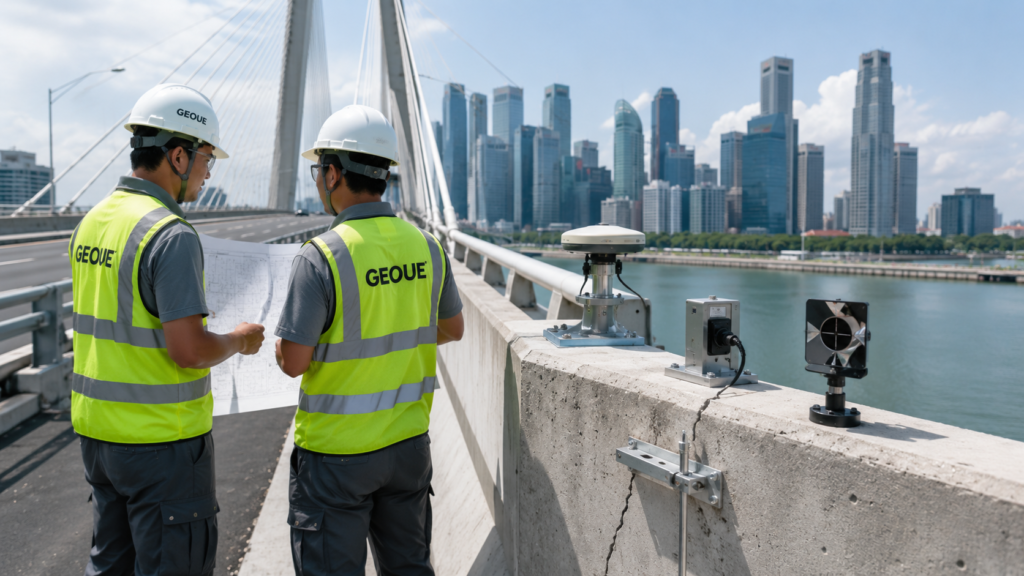
Geotechnical Consultancy
Design optimization and risk-based advice for safe and cost-effective solutions.

Monitoring Data Analysis
Trend Review
Alert Assessment
Interpretation
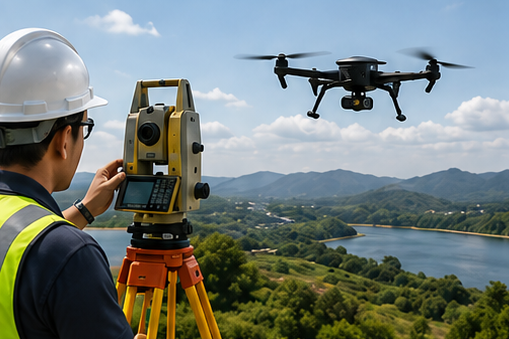
Technical Review
Third-party Review
QA/QC
Independent Assessment
Get In Touch
Let’s Work Together on Your Next Project
We deliver engineering solutions that make a difference.