
Singapore · Technical Case Study
Tunnel Excavation Monitoring in Singapore: How Tunnelling Can Affect Adjacent Buildings
Tunnel excavation in a dense urban environment can influence the ground, groundwater and nearby structures well beyond the tunnel itself. This technical case study explains the monitoring instruments commonly used around adjacent houses and buildings in Singapore, what each instrument is intended to detect, and how engineers can interpret abnormal monitoring trends.
01 · Engineering Context
Why can tunnel excavation affect nearby houses and buildings?
During tunnelling, the stress state of the ground changes as soil or rock is excavated and tunnel support is installed. Small amounts of ground loss, changes in face support, local deformation around the excavation and groundwater variations may generate a settlement trough extending toward neighbouring properties.
The engineering concern is therefore not simply whether a building moves. The more important questions are how much it moves, whether movement is uniform or differential, how quickly the trend is developing, whether cracks or tilt are changing at the same time, and whether the behaviour correlates with tunnel advance or another construction activity.
A well-designed instrumentation and monitoring programme combines different measurements so that movement can be independently checked and interpreted rather than relying on one instrument alone.
02 · Potential Effects
The same tunnel can produce different responses in different buildings.
Ground Settlement
Ground deformation generated around the tunnel can extend toward the surface. Surface and building movement may develop gradually as the tunnel face approaches, passes beneath or moves away from the monitoring area.
Differential Settlement
A building does not necessarily settle uniformly. Differences in foundation type, building stiffness, distance from the tunnel and local ground conditions can create relative movement between different parts of the same structure.
Groundwater Change
Changes in groundwater or piezometric conditions can influence effective stress and ground deformation. Where groundwater-sensitive soils are present, settlement trends should be reviewed together with piezometer monitoring .
Structural Response
Settlement may be accompanied by building tilt, crack movement or local structural deformation. Correlating these measurements helps distinguish broader ground response from localised building behaviour.
03 · Monitoring Instruments
Which instruments are commonly used around buildings near tunnel excavation?
Instrument selection depends on the tunnel alignment, ground conditions, building foundations, predicted zone of influence, construction method and approved monitoring requirements. A typical geotechnical instrumentation system may combine ground, groundwater and structural measurements.
| Instrument | Primary Responsibility | Typical Abnormal Observation | Engineering Question |
|---|---|---|---|
| Building Settlement Marker | Measures vertical movement of selected building locations relative to an established survey reference. | Accelerating settlement or increasing difference between adjacent markers. | Is the building moving vertically, and is the movement uniform or differential? |
| Survey Prism | Provides three-dimensional monitoring of building or structural movement using conventional or automated survey systems. | Progressive displacement, sudden coordinate jump or inconsistent behaviour relative to neighbouring targets. | Is the structure translating, settling or moving laterally? |
| Automatic Total Station | Repeatedly measures multiple survey prisms and can support higher-frequency automated deformation monitoring. | Spatially coherent movement across several targets, or isolated readings affected by visibility or target disturbance. | Is a movement pattern developing across the building or monitoring zone? |
| Tiltmeter | Measures rotation or angular change of a wall, column or other structural element. | Progressive change in tilt, rapid rotation or a trend that correlates with differential settlement. | Is settlement causing rotation rather than simple vertical translation? |
| Crack Meter / Crack Gauge | Tracks changes in crack width or relative movement across an existing crack. | Progressive crack opening, abrupt movement or recurring opening and closing cycles. | Is an existing defect responding to construction-related deformation? |
| Vibration Monitor | Records construction vibration, commonly including particle velocity and event information. | Short-duration peaks, repeated elevated events or vibration coinciding with nearby construction activities. | Is construction generating vibration that requires review against project-specific criteria? |
| Piezometer / Water Standpipe | Monitors groundwater or piezometric conditions surrounding the tunnel and affected ground. | Sustained groundwater decline, sudden pressure change or unexpected divergence between nearby instruments. | Could groundwater change be contributing to observed ground or building movement? |
| Inclinometer | Measures lateral ground deformation with depth and helps identify subsurface movement profiles. | Progressive lateral displacement concentrated at a particular depth or movement increasing as excavation advances. | Where is the ground moving laterally, and at what depth is movement developing? |
Building movement should not normally be interpreted from one reading in isolation. Independent parameters such as settlement, tilt, crack movement, lateral ground deformation and groundwater response provide a much stronger basis for engineering review.
04 · Singapore Reference
A real Singapore example shows why dense monitoring can matter.
Circle Line 6 tunnelling near the former Tanjong Pagar Railway Station
The Land Transport Authority publicly reported that tunnelling between Prince Edward Road and Cantonment stations passed beneath the former Tanjong Pagar Railway Station, a National Monument. The tunnel works were carried out approximately 6.7 metres below the building’s piles.
LTA stated that extensive foundation investigations and additional protective measures were undertaken and that more than 600 monitoring instruments were installed and monitored around the clock to detect movement of the building during tunnelling.
This public example demonstrates an important principle for tunnel excavation monitoring in Singapore: where sensitive buildings are located close to underground works, monitoring density, measurement frequency and rapid interpretation may become central parts of construction risk management.
Public reference: Land Transport Authority — Completion of Circle Line 6 Tunnelling Works . This is a public Singapore reference and is not presented as a GEOUE-contracted project.
05 · Abnormal Trend Interpretation
What does an abnormal monitoring result actually mean?
An abnormal reading is not automatically evidence of structural damage. Equally, a reading should not be dismissed simply because only one instrument has changed. The first task is to determine whether the observation represents genuine engineering behaviour, an environmental effect, an instrument issue or a measurement problem.
| Observed Pattern | Possible Interpretation | Recommended Technical Check |
|---|---|---|
| Gradual settlement across several building markers | May represent a broad ground response associated with tunnelling, consolidation or another construction influence. | Review settlement rate, spatial pattern, tunnel chainage, construction sequence and nearby ground monitoring. |
| One side of a building settles faster than the other | Potential differential settlement and associated angular distortion. | Correlate with survey prisms, building monitoring , tiltmeters and crack observations. |
| Settlement followed by increasing tilt or crack width | Multiple independent measurements may be describing a consistent structural response. | Increase engineering scrutiny and review the combined trend rather than each instrument separately. |
| Groundwater falls before settlement begins | Groundwater change may be one contributing mechanism, depending on soil conditions and the project. | Review piezometers, standpipes, pumping records and the ground model. |
| A single prism suddenly moves while all neighbouring instruments remain stable | Could indicate target disturbance, survey visibility, reference-control problems or a genuine local movement. | Verify the target physically, repeat the observation and compare with independent survey references. |
| High vibration event but no settlement, tilt or crack response | May represent a short-duration construction event without measurable permanent deformation. | Correlate timestamp and event history with vibration monitoring and site construction records. |
| Crack width repeatedly opens and closes | May reflect thermal or environmental response rather than progressive structural deformation. | Examine time-of-day pattern, temperature, building movement and crack monitoring history. |
| Lateral movement develops in the ground before building movement is observed | Subsurface movement may be developing before a clear surface response appears. | Review the deformation profile through inclinometer monitoring together with tunnel progress. |
Correlation is more valuable than a single number.
If settlement, tilt, crack movement, groundwater change and tunnel progress all develop in a coherent sequence, confidence that the trend represents genuine engineering behaviour becomes significantly stronger. Where readings disagree, validation and investigation become part of the monitoring process.
06 · Engineering Response
How should an unexpected monitoring trend be reviewed?
Trigger, alert, intervention or work-suspension criteria should be established by the approved project requirements and responsible engineering parties. Generic limits should not be copied from another project because acceptable movement depends on the structure, ground conditions, construction method, assessment and design.
Validate the reading
Check instrument condition, survey controls, recent maintenance, communication status and whether the reading can be independently repeated.
Compare neighbouring instruments
Determine whether the change is isolated or forms a spatial pattern across nearby settlement markers, prisms, tiltmeters, crack meters or ground instruments.
Correlate with construction activity
Compare the timestamp and trend with tunnel-face location, excavation sequence, grouting, dewatering and other relevant site activities.
Review trend and rate
A gradually increasing rate may be more significant than a stable accumulated value. Examine both magnitude and rate of change.
Compare with project-specific criteria
Review the approved monitoring levels and response procedures rather than applying generic thresholds.
Escalate and document
Where required by the project monitoring plan, notify the responsible engineering parties, document the investigation and consider increased monitoring frequency or additional measurements.
Projects requiring independent trend assessment can also use a structured monitoring review or geotechnical monitoring consultancy process.
07 · Before Excavation
Reliable monitoring begins before the tunnel reaches the building.
Baseline information is critical because construction-stage readings only become meaningful when they can be compared with a stable reference condition. Monitoring preparation may include condition surveys, baseline survey readings, crack documentation, groundwater readings and confirmation of instrument stability.
Depending on the project, the engineering team may also review soil investigation > information and geophysical survey results to better understand subsurface conditions before interpreting monitoring behaviour.
Where launch shafts, station boxes or other deep excavations form part of the tunnelling works, the monitoring strategy may also interface with deep excavation monitoring and ERSS monitoring .
08 · Monitoring Frequency
When should automated monitoring be considered?
Automated systems may be useful where movement can change rapidly, where a large number of targets require frequent observations, or where project risk requires shorter intervals between measurements. Automatic total stations, remote data acquisition and digital monitoring platforms can supplement conventional manual observations where appropriate.
Automation does not remove the need for engineering interpretation. A reliable automated monitoring system should still include data validation, instrument health checks, threshold management and clearly defined response procedures.
09 · Singapore Context
Monitoring plans must be connected to the engineering design and response process.
Singapore’s published Building Control provisions for underground building works address instrumentation and monitoring plans covering neighbouring structures, instrument types and locations, monitoring frequency and duration, and allowable ground or building movement limits. Project implementation and review remain subject to the applicable approved plans, responsible Qualified Persons, contract requirements and regulatory conditions.
Regulatory reference: Building and Construction Authority — provisions relating to underground building works and instrumentation and monitoring .
10 · Related Services
Related Singapore instrumentation and monitoring services.
Discuss Your Singapore Project
Need a monitoring strategy for tunnelling near buildings?
GEOUE supports instrumentation planning, field monitoring, building movement assessment, data review and technical monitoring solutions for underground construction and infrastructure projects in Singapore.
Explore Instrumentation & MonitoringOur Engineering Services
End-to-end instrumentation and monitoring solutions for safe, efficient and data-driven projects.

Instrumentation & Monitoring
Design. supply and installation of geo / structural instruments.

Soil Investigation
In-situ and lab testing
to assess ground conditions.
Geophysical Survey
Advanced geophysical methods
for underground mapping.

Geotechnical Consultancy
Technical advisory and design support for geotechnical works.

Survey
Precision surveying using total stations, GNSS, LiDAR and drones.
Structural Monitoring
Real-time monitoring of structures for performance and safety assurance.

Installation
Professional installation by experienced teams with strict quality control.

Maintenance
Routine maintenance, and data validation for long-term performance.
Singapore Project Experience
The GEOUE team members have participated in a wide range of geotechnical instrumentation and monitoring projects across Singapore, including transportation infrastructure, deep excavation, underground construction and private developments.
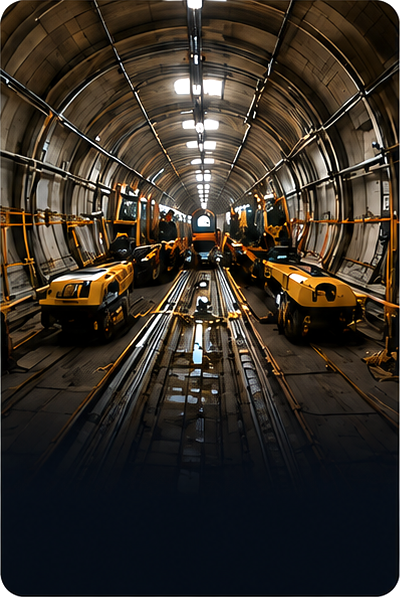
MRT & Rail Projects
Instrumentation and monitoring works for MRT lines and rail infrastructure.

Deep Excavation
Monitoring of deep basements and retaining structures in dense urban areas.
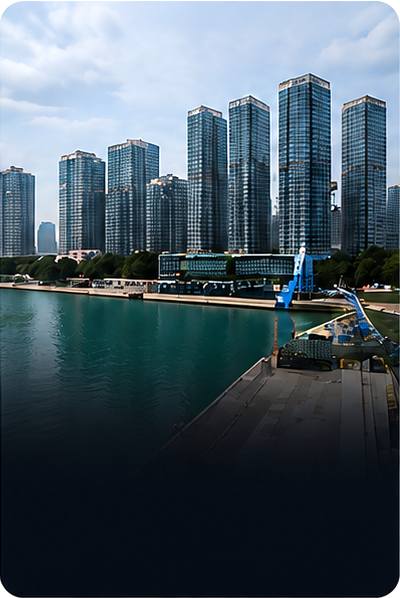
Building & Development
Monitoring solutions for high-rise, mixed-use and residential developments.
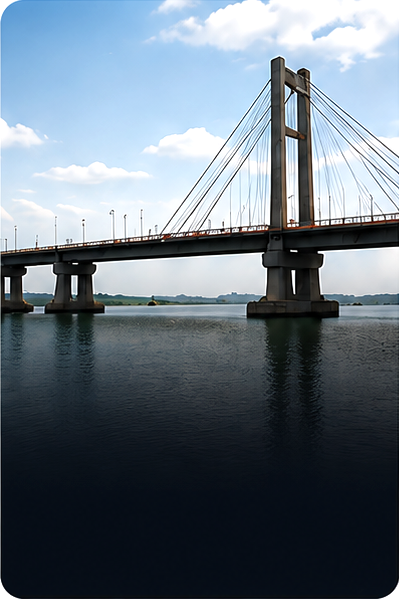
Bridges & Structures
Structural health and performance monitoring for bridges and infrastructure.
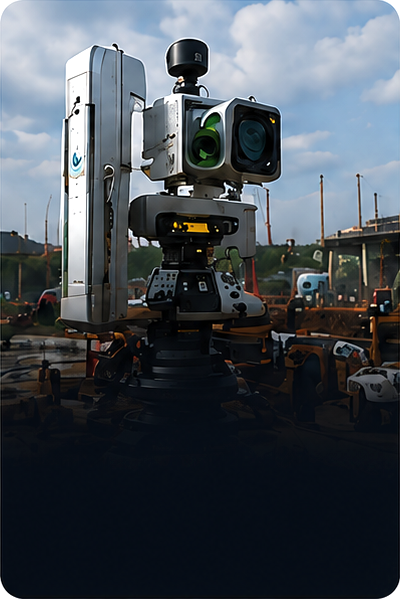
Industrial & Utilities
Instrumentation and Monitoring for utilities, tunnels, pipelines and industrial facilities.
Our Approach

Understand
We study your site and project requirements.

Monitor
We monitor, analyze and
provide actionable insights.

Design
We design the right
solution for your needs.

Partner
We partner with you to
ensure long-term success.

Deliver
We install and commission
with precision.

Support
We maintain and support
for the long term.
Our Core Services
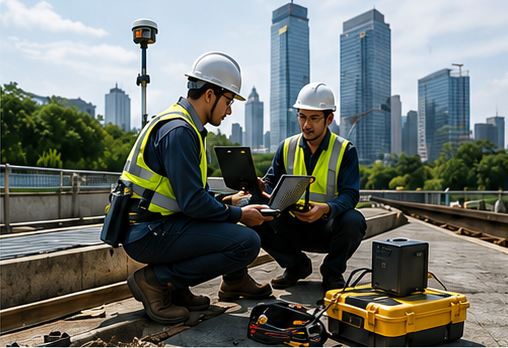
Instrumentation & Monitoring
Real-time data acquisition and monitoring for geotechnical and structural applications.
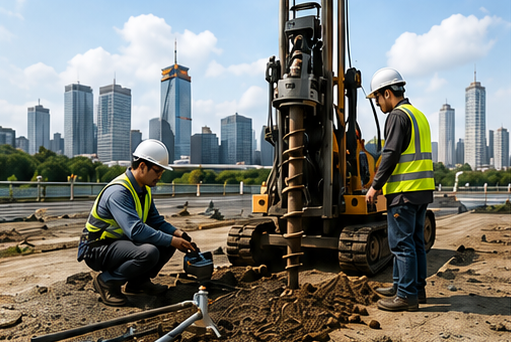
Soil Investigation
In-situ tests, sampling and laboratory analysis to evaluate subsurface conditions.
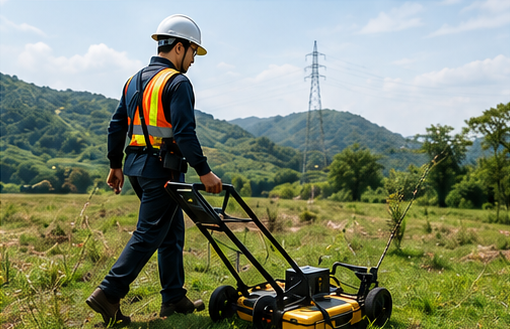
Geophysical Survey
Advanced geophysical methods to map subsurface conditions non-destructively.
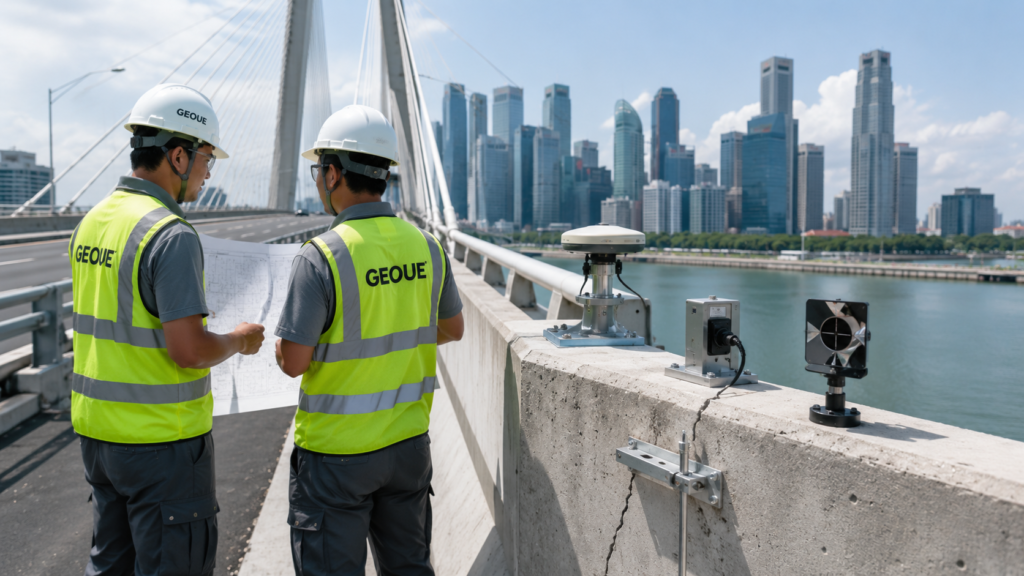
Geotechnical Consultancy
Design optimization and risk-based advice for safe and cost-effective solutions.

Monitoring Data Analysis
Trend Review
Alert Assessment
Interpretation
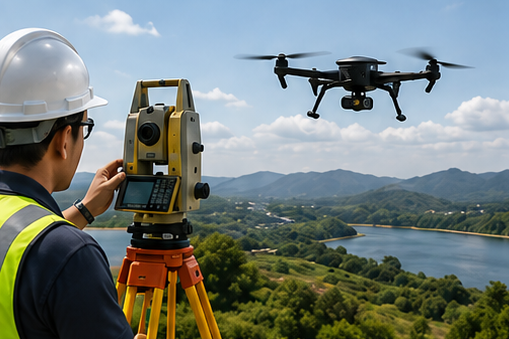
Technical Review
Third-party Review
QA/QC
Independent Assessment
Get In Touch
Let’s Work Together on Your Next Project
We deliver engineering solutions that make a difference.